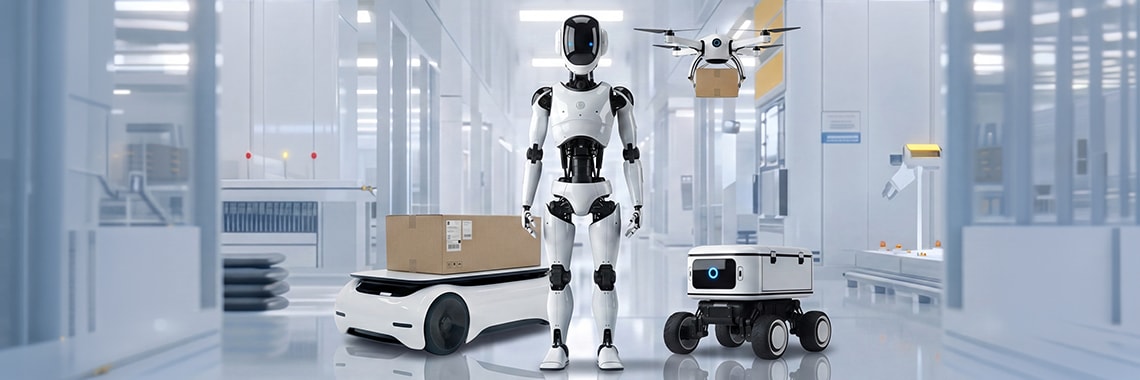
A humanoid robot cannot control its body effectively unless it knows what it is experiencing. It must continuously monitor joint position, forces throughout its limbs, pressure beneath its feet, and grip stability. It must also recognize excessive temperature, abnormal vibration, mechanical wear, and other conditions that could undermine performance or safety.
Seeing the world is only part of physical intelligence. A humanoid robot cannot control its body effectively unless it knows what it is experiencing. It must continuously monitor joint position, forces throughout its limbs, pressure beneath its feet and grip stability. It must also recognize excessive temperature, abnormal vibration, mechanical wear and other conditions that could undermine performance or safety. To move, manipulate objects and interact safely, a humanoid robot must also sense what is happening within its own body.
The capacity to understand what a humanoid robot is experiencing can be referred to as physical self-awareness. However, it is not consciousness or human-like introspection. Rather, it is the robot's ability to maintain a reliable, continuously updated model of its own mechanical state.
External perception may help a robot identify an object or select a destination, but it cannot reveal everything happening within the robot's body. A camera cannot directly determine whether a wrist is overloaded, a fingertip is losing traction or a gearbox is developing additional friction as these conditions must be measured at their physical source.
Many of the sensors needed for this internal awareness generate analog signals. Their outputs may be small differential voltages, changes in resistance, bridge measurements or conditioned voltage and current signals. Analog front ends (AFEs) such as the NAFEB43388 provide a flexible path for converting these physical measurements into accurate digital information that local controllers and higher-level processors can use.
Unlock the inner sense critical for humanoid real-world operation. Learn how the NAFEB43388 enables physical self-awareness through precision analog sensing.
With eight configurable analog inputs, a 24-bit sigma-delta analog-to-digital converter (ADC), a programmable-gain amplifier, integrated voltage and current excitation and diagnostic capabilities the NAFEB43388 can acquire signals from bridge sensors, resistance temperature detectors (RTDs), thermocouples, resistive sensors and voltage or current outputs. This versatility can help humanoid designers consolidate force, position, temperature and condition-monitoring functions while maintaining the precision and flexibility required for distributed sensor acquisition.
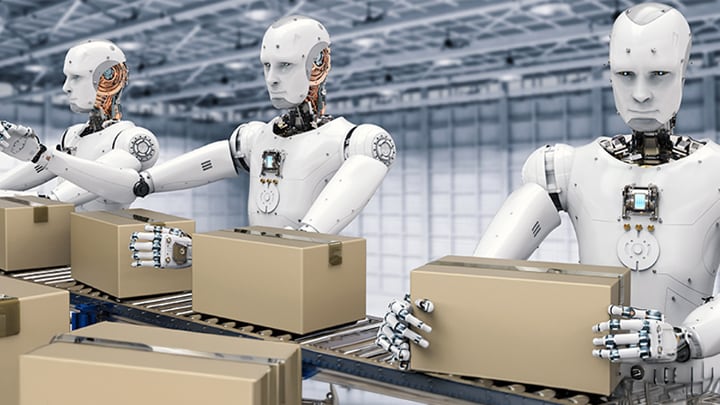 Physical self-awareness enables humanoid robots to measure force, pressure and contact conditions during object handling.
Self-Awareness Begins with Contact
The hands, feet and other contact surfaces are where a humanoid encounters the physical world. Contact sensing allows the robot to determine not only whether it has touched something, but also how that interaction is developing.
Several analog sensor technologies can provide the following information:
- Force-sensitive resistors
- Piezoresistive pressure elements
- Strain-gauge bridges
- Piezoelectric vibration elements
- Analog pressure transducers
- Resistive tactile arrays
Force-sensitive resistors and piezoresistive elements are useful where the system needs to detect pressure across a surface. They can be distributed through fingertips, palms, foot soles, forearms or compliant protective coverings. Their resistance changes with applied load, allowing an AFE with suitable excitation and measurement capability to translate physical pressure into a digital value.
Strain-gauge structures can provide more precise force measurements. A mechanical feature beneath a fingertip or gripping surface deforms slightly under load. Strain gauges bonded to that feature convert the deformation into a small change in bridge voltage. The signal is typically low in amplitude, so it requires low-noise amplification, high-resolution conversion, stable excitation and calibration.
Together, pressure and strain measurements can reveal contact location, applied force and load distribution. This information enables a much more precise force control and object manipulation than a simple contact switch can provide.
Detecting Slip Before an Object Falls
A stable grasp is dynamic. The required gripping force can change as the robot moves, as the object's weight shifts or as the contact surface changes. Waiting until an object has visibly moved may be too late.
Micro-slip can produce subtle changes in vibration, pressure distribution and tangential loading. A humanoid hand can detect these transitions by combining multiple analog measurements. For example, a piezoelectric element may capture a high-frequency vibration while nearby pressure sensors show a redistribution of contact force. These signals can indicate that the interface between finger and object is becoming unstable.
- The response should occur locally whenever possible in such examples:
- A tactile or vibration sensor generates an analog signal in response to a change in contact force, pressure distribution, or vibration
- The NXP analog front end (NAFE) signal chain converts the analog event into usable measurement data
- A nearby processor classifies the event as slip, impact or pressure redistribution
- The hand controller adjusts finger force or position
- The system verifies that the grasp has stabilized
This local loop reduces dependence on a central processor and avoids unnecessary delays. Higher-level control does not need every raw tactile sample. It may only need to know that the object is secure, that the grip force has been modified or that the grasp cannot be stabilized.
Sampling requirements influence the choice of AFE. Slowly changing pressure signals may prioritize resolution and power efficiency while vibration and micro-slip detection may require higher data rates. A mixed architecture can therefore use different NAFE configurations for static load measurements and dynamic contact events.
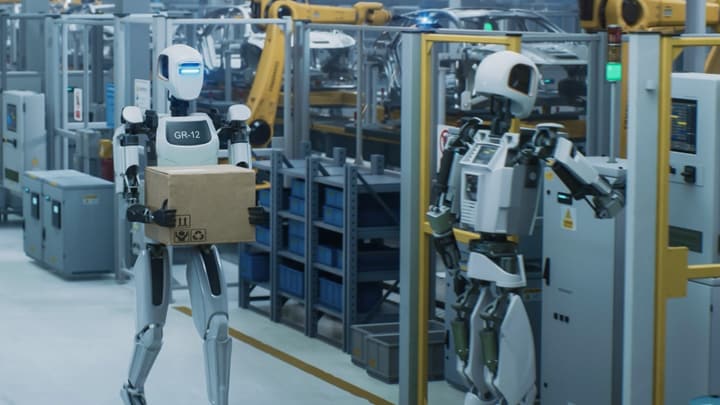 Continuous load monitoring for humanoid robots improves payload handling, stability and interaction safety.
Measuring Force and Torque Throughout the Body
Physical self-awareness must extend beyond the hands. Forces travel through the wrists, elbows, shoulders, torso, knees, ankles and feet. Measuring these loads allows the control system to understand how commanded motion is being translated into mechanical effort.
Strain gauges arranged as Wheatstone bridges are well suited to this task. They can be integrated into deliberately compliant mechanical elements at strategic points including:
- Wrist and tool interfaces
- Finger and gripper mechanisms
- Joint output structures
- Ankle assemblies
- Foot plates
- Arm and leg links
- Torso load paths
The measured deformation can be calibrated into force or torque. A wrist structure, for example, can be instrumented to estimate several components of force and moment. This enables the robot to regulate tool pressure, limit interaction forces, estimate payload and detect unexpected contact.
Torque sensing near a joint also creates an independent view of actuator behavior. If the controller commands a particular torque but the measured structural response is significantly different, the system can investigate possible causes such as an obstruction, mechanical backlash, drivetrain friction or sensor error.
Because strain-gauge outputs are small, signal-chain quality directly affects what the robot can perceive. Offset, drift, noise, excitation stability and temperature affects all influence the final measurement. A configurable NAFE can accommodate different bridge sensitivities through programmable gain and high-resolution conversion while supporting calibration over the entire signal path.
Building Proprioception with Analog Position Sensors
Proprioception is one component of physical self-awareness, referring to the robot's knowledge of its joint positions, limb configuration and internal movement. It includes joint angles, linear displacement, finger position and deformation within compliant mechanisms.
Although digital encoders are common in humanoid joints, several analog position technologies can complement or in some cases replace them:
- Rotary and linear potentiometers
- Analog magnetic angle sensors
- Conditioned inductive displacement sensors
- Eddy-current displacement sensors
- Flex sensors
- Conditioned linear variable differential transformers (LVDTs)
These devices can generate voltage or resistance signals suitable for acquisition through a NAFE. In a compact mechanism such as a finger, a flex or magnetic sensor may provide direct feedback about joint configuration. In a larger joint, an analog sensor can serve as an independent secondary measurement alongside the primary encoder.
Using diverse sensing principles improves fault detection. A digital motor encoder may report that the motor shaft reached the commanded position while an analog sensor at the joint output shows that mechanical compliance or drivetrain damage prevented the limb from reaching the expected angle. Comparing the two measurements exposes a problem that either sensor alone might miss.
Analog position measurements can also be compared with force, torque and motor current. If the position remains unchanged while the current and measured force increase, the joint may be pushing against an obstacle. If commanded motion produces motor rotation but little output displacement, the drivetrain may contain excessive backlash or a mechanical fault.
Using Motor Current as a Measure of Effort
Motor current provides another view of a humanoid's physical state. In many actuator types, current is related to the torque generated. Measuring it can therefore help estimate effort, identify contact and monitor drivetrain condition.
Motor current can be measured through a shunt resistor, Hall-effect current sensor, current transformer or an isolated measurement stage. The resulting analog voltage or current is then conditioned and matched to the measurement range using the NAFE's programmable gain amplifier (PGA) and configurable input architecture.
Useful information derived from motor-current measurements includes:
- Actuator load
- Stall or obstruction detection
- Unexpected contact
- Increasing mechanical friction
- Repetitive load variation
- Drivetrain degradation
- Excessive power demand
Current alone is not a complete torque measurement. Gear efficiency, acceleration, temperature, lubrication and friction affect the relationship between electrical current and output force. The greatest value comes from combining current with joint position, structural strain and temperature.
For example, a gradual increase in current during a repeatable movement could indicate bearing wear or increased gearbox friction. If structural torque remains unchanged, the additional electrical effort is likely being consumed internally rather than delivered to the load.
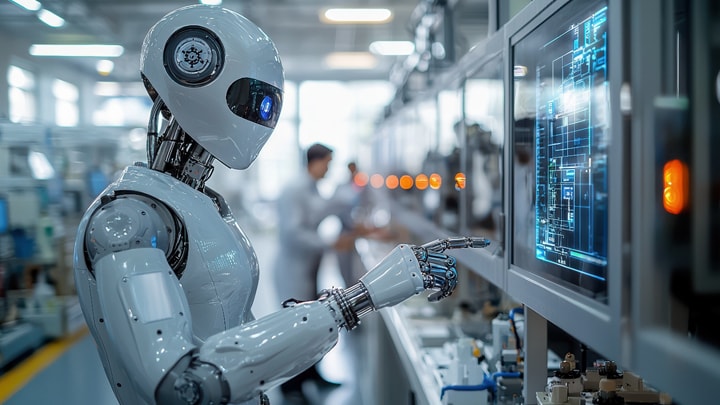 Combining sensor data creates a trustworthy model of the robot's physical condition and behavior.
Understanding Balance Through Foot and Ankle Loads
Walking requires the humanoid to know how its weight is distributed at every moment. Pressure sensors embedded in the feet can identify heel strike, toe loading, center-of-pressure movement and transitioning between supported and unsupported phases.
Resistive pressure elements can provide a spatial pressure map while load cells or strain-gauge structures can measure total force more accurately. Ankle strain sensing adds information about bending moments and lateral loading.
These measurements allow the controller to answer the following important questions:
- Has the foot made stable contact?
- Does the measured support force match the expected load? Is weight shifting toward the edge of the foot?
- Has the robot stepped on an uneven or compliant surface?
- Does the measured load agree with the planned gait phase?
- Is one leg carrying an unexpectedly high proportion of body weight?
Foot-force measurements are especially valuable because they describe the actual mechanical boundary between the robot and the ground. They can reveal slipping, partial contact or unstable loading even when the commanded joint positions appear correct.
Monitoring Temperature and Mechanical Condition
A humanoid also needs awareness of its internal health. Motors, gearboxes, bearings, power electronics and structural components operate under changing loads. Their temperature and vibration patterns can reveal problems before those problems become visible through motion.
NAFE-compatible temperature technologies include:
- RTDs
- Positive- and negative-temperature-coefficient thermistors (PTCs and NTCs, respectively)
- Thermocouples
- Analog-output temperature sensors
Resistance-based sensors require controlled excitation and precise resistance measurement. Thermocouples produce small voltages that require amplification and cold-junction compensation. The selected approach depends on temperature range, accuracy, placement, response time and cost. The NAFE's configurable architecture enables support for multiple temperature sensor types, allowing designers to accommodate RTDs, thermistors, thermocouples and analog-output temperature sensors without changing the underlying measurement platform.
Thermal information supports both protection and measurement accuracy. It can prevent an actuator from exceeding its safe operating temperature, but it can also compensate for other sensors whose output changes with temperature. Load cells, strain gauges, resistive pressure sensors and mechanical transmissions can all exhibit temperature-dependent behavior.
Vibration sensing adds another dimension to condition monitoring. Piezoelectric sensors and analog accelerometers can detect impacts, gear-tooth events, bearing defects, structural resonance and looseness. Repeated measurements can establish a baseline signature for each actuator. Changes in that signature can then identify developing faults.
The humanoid can use this information to reduce joint speed, limit load, schedule maintenance, or avoid a movement that could accelerate damage.
From Sensor Data to a Trustworthy Body Model
Physical self-awareness does not come from adding more sensors indiscriminately. Rather, it comes from producing measurements that are accurate, time-aligned, diagnosable and consistent with one another.
Every sensing channel should support appropriate checks, such as:
- Startup offset measurement
- End-to-end calibration
- Open- and short-circuit detection
- Input saturation detection
- Excitation monitoring
- Temperature compensation
- Range and rate-of-change checking
- Cross-sensor plausibility testing
- Timestamping
- Detection of stale or missing data
Cross-sensor comparison is particularly important as outlined by the following examples:
- Wrist load should agree with joint torque and expected payload
- Foot pressure should agree with the current gait phase
- Motor current should be plausible for the measured acceleration and external force
- Tactile slip event should correspond to a change in pressure, vibration or finger position
When signals disagree, the controller should avoid treating any one measurement as unquestionable. Rather, it can reduce operating limits, recalibrate a channel, switch to a redundant sensor or enter a controlled safe state.
Distributed measurement nodes based on devices such as the NAFEB43388 can help organize this architecture. Rather than routing every low-level analog signal to one central board, measurement electronics can be placed near the sensors located throughout the hand, wrist, ankle, foot or joint. Shorter analog connections can reduce noise susceptibility, while local processing can convert raw samples into calibrated values, health indicators and time-critical events.
The Foundation of Physical Intelligence
A humanoid's most important sensing system may not be the one that observes the surrounding environment. Rather, it may be the network that tells the machine what is happening within its own body. For example:
- Pressure sensors describe contact
- Strain gauges measure force and torque
- Analog position sensors reveal joint configuration
- Current sensors indicate actuator effort
- Temperature sensors establish thermal margin
- Vibration sensors identify slip, impact and mechanical degradation
The NAFEB43388 provides a highly configurable measurement platform for many of these sensors by supporting configurable analog inputs, precision conversion, excitation, gain control, calibration and diagnostic functions. This allows different parts of the humanoid to form a consistent acquisition architecture even when the physical measurements vary. By using a consistent acquisition architecture across different sensor types, developers can simplify system design while delivering the accurate, reliable and responsive measurements needed for dexterous manipulation, balance control, condition monitoring and safe human-machine interaction.
When these signals are combined, the robot gains a continuously updated model of its configuration, loading, contact and condition. This inner sense is what allows the robot to regulate force, recover from disturbances, recognize faults and interact safely with people and objects.
In summary, physical intelligence begins with knowing the state of the body, and for humanoids, much of that knowledge begins with measuring physical conditions one analog signal at a time.