A whole new wave of innovative mobility startups appeared soon after Tesla
disrupted the long-established automotive industry. Now the hype phase is over
as all eyes look to see if Silicon Valley can crack the complex auto industry
code.
From Demand to Design
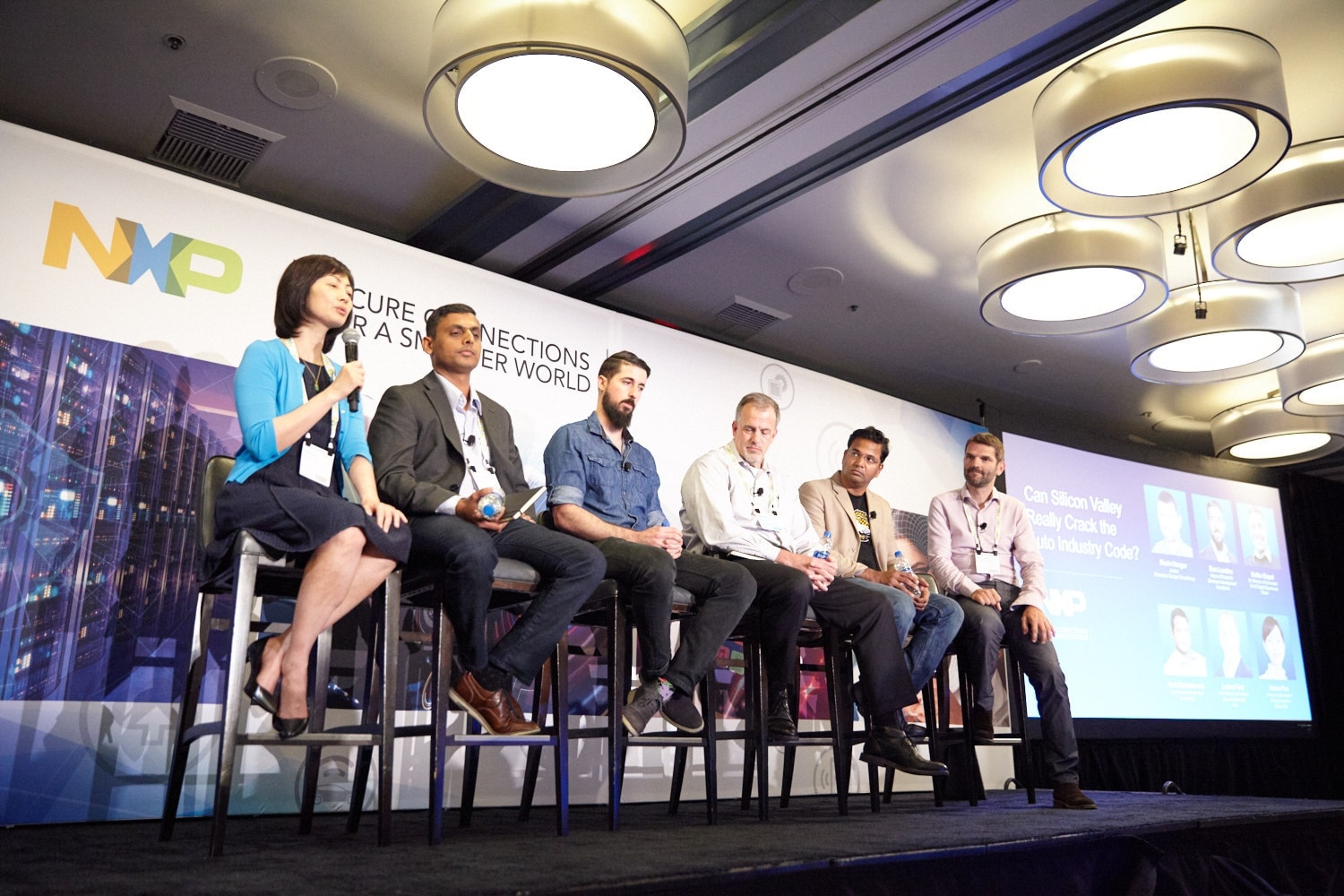
At NXP Connects in Silicon Valley, we brought together a panel of industry
experts from Rivian, Baidu, Continental and DeepScale to discuss the
challenges and opportunities ahead, as the world watches on to see if Silicon
Valley can navigate the pivotal changes the auto industry is expecting.
Silicon Valley is well into the race, but the finish line may be
blurry
Today, “cracking the auto industry code” seems a long way off
and we don’t really know what success looks like yet or what consumers
want from an autonomous car. Every region has a different perspective on the
value proposition a vehicle offers and how technology should be built and
adopted. So the thought of creating one global solution might not be realistic
and achieving anything close to it won’t happen if automotive companies
are working in an echo chamber.
“‘The code that they’re cracking’ is actually
changing in terms of what the expectations are from the consumers,”
Leland Key, SVP Global Automotive Sales and Marketing at NXP shared.
It’s going to take many of the world’s sharpest minds working
together, looking far beyond the cities they live in, to get close to creating
a product that “works” across the world. Achieving any
groundbreaking autonomous solution will require collaboration—which is
why many believe Silicon Valley may achieve major breakthroughs in the auto
industry before everyone else.
“There are certain things that cannot be achieved by just 10, 20, 30,
40, 100 people. It requires this community setting. Linux is a great example.
All of that came together to allow a platform that is being used in millions
of millions of devices today,” Sethu Gopal, Sr. Director, Connected Car
and Digital Experience at Rivian shared.
Silicon Valley’s culture of collaboration could be the difference
“Who in the world knows how to handle data better than Silicon Valley?
And that’s, where I think the valley comes in—breaking that auto
industry code of, you know, trying to do everything in-house versus trying to
do outside their ecosystem,” Anil Rachakonda, Vice President, co-pace
at Continental said.
People working for tech companies in Silicon Valley want to be there. It may
be expensive, crowded and overwhelming at times, but the people that are
working in Silicon Valley are exactly where they want to be. It offers a
unique, casual and accessible opportunity for collaboration that few cities in
the world can rival. No ambitious CEO wants to wait days or weeks to get a
chance to talk to someone they’re interested in working with, but
that’s the reality for most cultures. Silicon Valley doesn’t
have these barriers, which is why we expect to see some compelling
partnerships develop.
Automotive companies may be forced to collaborate to keep up with consumer
demand
The automotive industry is making a transition from hardware to software as we
see companies like Tesla put millions of lines of code into their vehicles.
However, the majority of automotive companies don’t have the expertise
or code base… yet. This may lead some to seek outside help to ensure
that they stay in the race to get autonomous vehicles on the road.
Is the auto industry still a viable market to succeed?
Billions have been spent and nobody is expecting their money to return within
the next decade, at least. Tesla has made impressive breakthroughs in the
industry yet it still reports huge losses. It’s easy to understand why
automotive companies may not be feeling too optimistic about investing heavily
in autonomous cars today.
Despite the uncertainty ahead, startups are still raising money to build
autonomous cars as it’s clear that the world wants them; China is
already building highways to prepare for autonomous vehicles. Plus, there has
been a shift in the industry: car owners are driving less due to ride-sharing
services become ingrained in big city culture. This can only be a good sign of
what’s to come.
Even with the major setbacks the industry has seen, a collaborative network
continues to expand across the industry with startups, semiconductor
companies, automotive suppliers and established carmakers—which makes
us wonder, what type of partnerships will evolve?
Watch the recording:
Related recordings from NXP Connects Silicon Valley:
Monica Davis leads Automotive Marketing Communications at NXP Semiconductors. With a focus on software-defined vehicles and next-generation automotive platforms, she connects technology trends to the challenges and opportunities facing the mobility industry.