Advancing the Next Generation of Secure, Accurate Wireless Applications with the MCX W70 and KW43
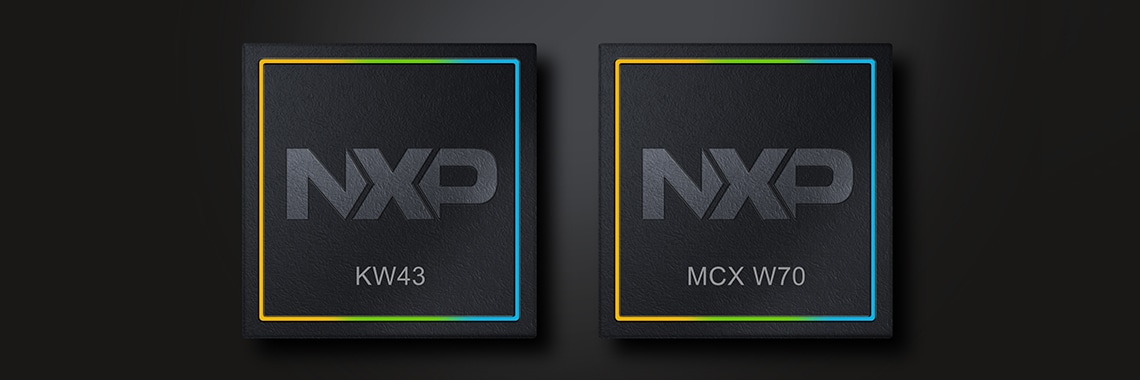
Countless applications—from digital keys and secure access to asset tracking—rely on accurately knowing the distance between two devices. Bluetooth® Channel Sounding (BCS) delivers secure ranging with centimeter-level accuracy. Now, NXP's new KW43 and MCX W70 Bluetooth 6.x microcontrollers (MCUs) enable developer to bring superior ranging performance and cost effectiveness to power- and space-constrained systems in the automotive and industrial sectors.
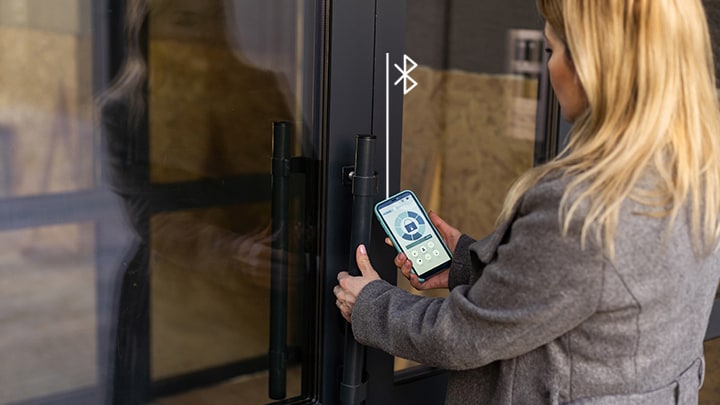
A key feature of the Bluetooth 6.0 specification, BCS is an innovative approach to calculating the distance between devices. It combines round-trip time (RTT) and phase-based ranging (PBR) to improve the accuracy and security of distance and positioning measurements while reducing latency. Bluetooth 6.3 further enhances these capabilities with refinements that improve ranging time, reduce processing overhead and consequently support more efficient operation across a wider range of applications. Together, these advancements enable more reliable positioning, lower power consumption and more scalable designs for use cases such as digital keys, secure access, asset tracking and more.
Integrated Solutions for Bluetooth Channel Sounding
To help developers smoothly incorporate evolving high-accuracy ranging capabilities into their designs, NXP offers a range of integrated, low-power wireless microcontrollers that support all 2.4 GHz protocols starting with standalone Bluetooth functionalities or Zigbee, Thread for Matter.
NXP is now expanding its portfolio with two new product series designed for systems that demand high ranging performance and security while optimizing cost, size and power consumption. The KW43 wireless MCU builds on the innovation and industry recognition established by the KW45 and KW47, bringing a pre-certified wireless solution to automotive applications. At the same time, the MCX W70 leverages the proven success of the MCX W72 to deliver optimized connectivity for industrial and IoT applications.
A Scalable Platform That Delivers Security and Accuracy Across Applications
NXP's family of Bluetooth 6.x Channel Sounding (CS)-certified wireless MCUs share a common technology platform. At the heart of this platform is a dedicated localization compute engine (LCE) that accelerates the complex positioning algorithms required for BCS ranging. The LCE speeds up algorithm execution time by nearly 45%, enabling faster response times and more power-efficient real-time ranging in complex environments.
The platform also includes multiple layers of security, enhanced by NXP's EdgeLock® technology. EdgeLock technology physically isolates security functions—such as cryptographic key storage and trusted boot processes—from the rest of the chip. All solutions in the family are certified to meet multiple security standards, helping reduce time to market. Security certifications for these devices include:
- SESIP level 2 / 3
- PSA level 2 / 3
- ISO 21434
- CE RED
- IEC 62443
- NIST Cryptographic Algorithm Validation Program
As developers anticipate post-quantum cryptography (PQC) requirements, KW43 and MCX W70 are PQC-ready.
Bring high-performance Bluetooth ranging to applications with demanding cost, power and space requirements. Discover how the KW43 and MCX W70 delivers.
Extending Bluetooth Channel Sounding to Cost- and Power-Constrained Systems
The first products based on this platform launched in 2025—the KW47 for automotive applications and the MCX W72 for industrial and IoT applications. NXP used previous generations for development and standardization at Bluetooth Special Interest Group (Bluetooth SIG). Building on the strong wireless performance of those devices, the KW43 and MCX W70 deliver high-performance Bluetooth connectivity and ranging alongside enhanced security features.
The new devices offer intellectual property (IP)-based security, implementing much of the EdgeLock functionality realized in software rather than in a separate hardware enclave. This implementation does not compromise security. In fact, the new devices are certified to SESIP Level 3 and PSA Level 3—one level higher than their predecessors.
The IP-based security also enables a unified memory architecture, replacing the separate memory block used for each core in the first-generation devices. This enhanced architecture delivers a more powerful, cost-optimized solution. As a result, the KW43 and MCX W70 are ideal solutions for applications in which cost, size or power consumption are critical, while the KW47 and MCX W72 are the go-to devices that require greater scalability.
How the KW43 Supports Secure Connectivity for Automotive Applications
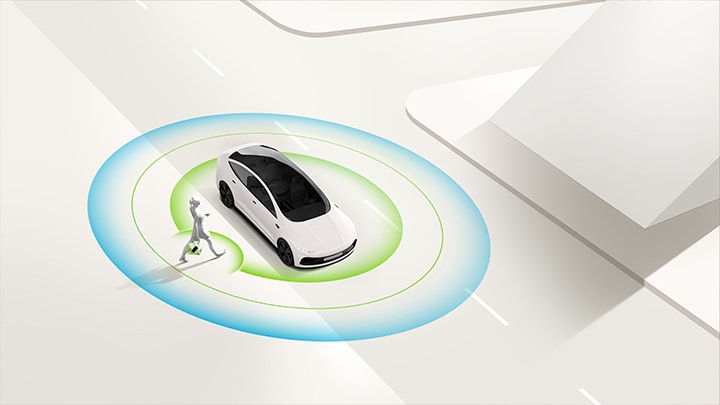
The KW43 adapts NXP's common BCS technology platform to withstand harsh automotive requirements. It is qualified to AEC-Q100 Grade 2 and features dedicated automotive networking options including Controller Area Network (CAN) and Local Interconnect Network (LIN). In particular, it supports automotive applications such as digital keys for secure car access or any others that rely on wireless connectivity.
How the MCX W70 Supports Multiprotocol Connectivity for Industrial and IoT Applications
The MCX W70 supports multiple 2.4 GHz wireless connectivity standards—including Zigbee, Thread for Matter and Aliro—alongside Bluetooth Low Energy (Bluetooth LE). It targets mass market (industrial) IoT applications including asset tracking, smart home environments, building automation, lighting, localization/distance measurement and more.
Accelerating Time to Market for Next-Generation Wireless Connectivity with Secure Ranging
The KW43 and MCX W70 allow developers to bring BCS capability to designs where constraints are tight and expectations are high. They deliver consistent, high-accuracy ranging and a responsive user experience across a wide range of applications. Meanwhile, the streamlined security implementation and unified memory architecture reduce system complexity, resulting in lower bill of materials (BOM) and more cost-efficient designs.
The new devices are already sampling and are targeted for broad availability in Q2 of 2027 with NXP offering evaluation kits that allow designers to realize the benefits of the new devices for themselves. Pre-certified and ready to integrate, the KW43 and MCX W70 help accelerate development cycles, so developers can move from concept to deployment faster, with confidence in performance and compliance.
Authors

Manisha Nandkumar Phadke
Manisha Nandkumar Phadke is the product manager and marketer for KW and MCX W7x wireless MCU families, focused on advanced Bluetooth solutions for automotive and IoT applications. Manisha drives end-to-end product strategy, customer-centric innovation and cross-functional execution to translate real-world requirements into scalable products. Manisha holds a master's degree in computer engineering with a focus on electrical engineering, from Arizona State University and brings broad experience in semiconductor new product introduction (NPI), business analytics, software development and enhancing customer experience.

Rakshit Grover
Rakshit Grover is a product marketing NPI launch manager at NXP, focused on wireless connectivity and MCUs for the mass market. Rakshit leads go-to-market (GTM) strategy, NPI launches and technical content development, translating complex semiconductor technologies into real-world applications. Rakshit holds a master's degree in engineering management from Duke University and brings prior experience in product management and embedded systems across semiconductor, medical device and robotics industries.